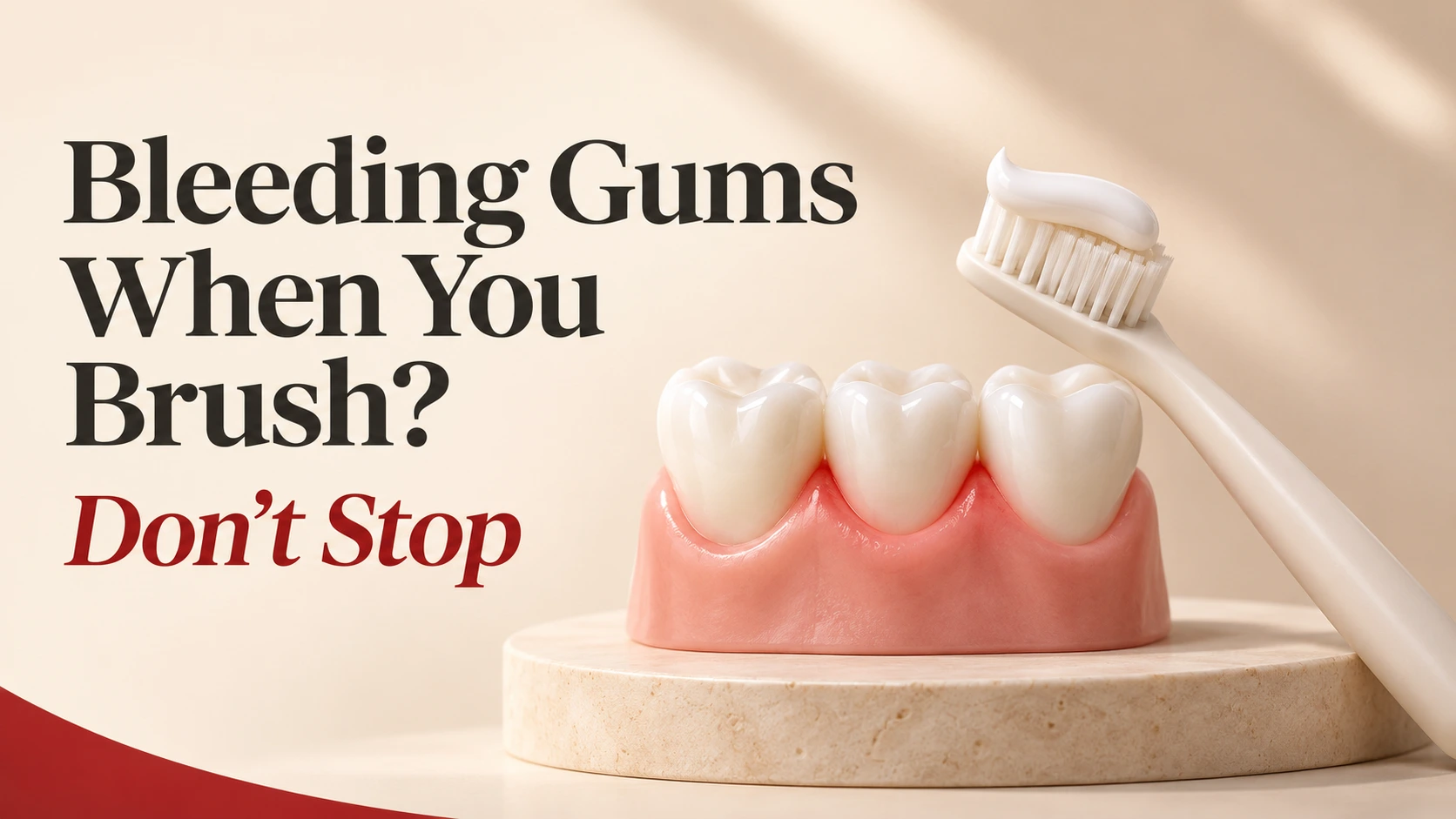
You see blood in the sink. You panic.
And you think: “I’ll brush less until it settles.” That’s exactly what makes it bleed more.
Why do gums bleed?
In most cases, the cause is gingivitis.
Bacterial plaque builds up along the gum line, and the gums become inflamed and bleed at the lightest touch.
A well-known older study shows this clearly: healthy people stopped cleaning their teeth, and within two to three weeks their gums became inflamed.
When they started cleaning again, their gums returned to normal within days.
So bleeding isn’t a sign you’re brushing too much. It’s a sign that area needs more cleaning.
What to do
- Keep brushing twice a day, with a soft brush and gentle strokes along the gum line.
- Clean between your teeth once a day, with floss before brushing at night.
Expect some bleeding for the first few days; that’s normal.
- Give it two weeks, and if the bleeding hasn’t settled, see your dentist.
When to see a dentist
- If it’s still bleeding after two weeks.
- If you have persistent bad breath, receding gums, or teeth that feel loose.
- If the bleeding comes with unexplained bruising or unusual tiredness, see your GP as well.
For smokers
Smoking reduces gum bleeding, even when the gums are inflamed.
So your gums can be unhealthy without bleeding.
Don’t take “no bleeding” as proof that all is well.